Multi-day hikes: Switzerland's great long-distance routes
SwitzerlandMobility signposts long routes split into stages, from 3 to 43 depending on the trail. Here are the ones that cross Bivio's regions, where to sleep along the way, and what the Swiss Alpine Club and Swiss Hiking Trails say about bivouacking.
From the village where a balloon took off on the first non-stop flight around the world to the cellars of L'Etivaz alpine cheese, over the Plan de la Douve.
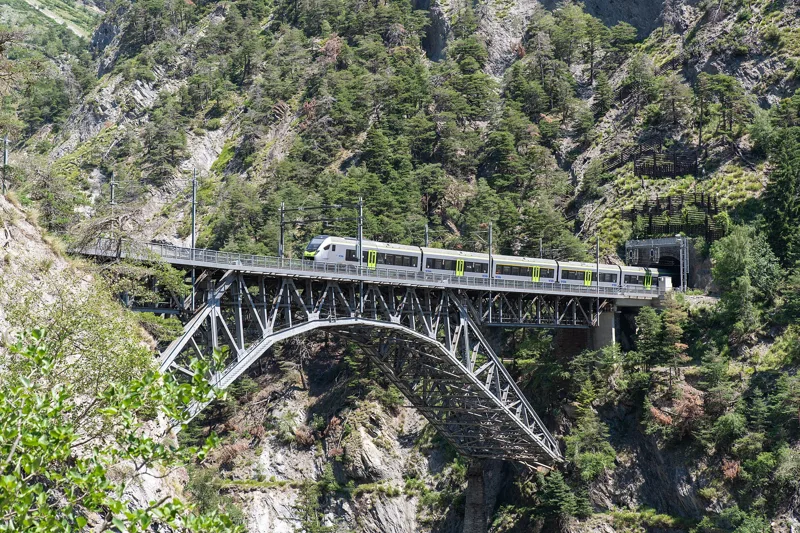
On the south-facing side of the Rhone valley, from Gampel to Ausserberg past the Lötschberg line, its irrigation channels, its gorges and its rocky steppe.
Most beds are in dormitories, and everyone eats together at big tables. Member or not, everyone is welcome.
When huts are staffed
About 120 huts are staffed in summer, roughly from mid-June to mid-October. Dates vary from hut to hut and can shift early and late in the season with the weather: check each hut's website.
Booking
Book ahead, especially in high season and at weekends: by phone, email or online. If your plans change, cancel: it's free within the deadline, but the hut can charge you for a no-show.
What to bring
Many huts take cards, but bring enough cash. The SAC asks you to bring a sleeping bag liner and a head torch, and to carry your rubbish back down.
Swiss Hiking Trails also lists hiking hotels and youth hostels.
Wild camping in Switzerland: what the SAC and Swiss Hiking Trails say
There's no single rule for the whole country.In principle, forests and pastures are open to everyone, but a canton or municipality can set limits. Many municipalities have their own rules: ask them.
Wild camping is banned in the Swiss National Park, in federal hunting reserves, in many nature reserves, and in wildlife rest areas during their protection period.
Above the tree line, unless a local rule says otherwise, a single night for a small group is generally fine if you respect nature.For several nights, Swiss Hiking Trails advises contacting the municipality first. An emergency bivouac is allowed in principle.
Don't sleep too close to a staffed hut.If you do want to stay nearby, ask the hut team and offer to pay for the toilets or buy something there.
Bivouac without leaving a trace
Use an existing fire pit and respect fire bans.
Stay at least 50 m from streams when you go to the toilet, dig a hole about 15 cm deep and fill it in. Pack out your paper, don't burn it.
Take all your rubbish and food scraps with you.
Avoid wetlands and floodplains, and keep your distance from streams: the water can rise suddenly.
Keep the noise down at dusk, and be discreet in spring, when birds nest on the ground.
Check the weather and local hazards (rockfall, avalanches, floods, storms) before you pick your spot.
Questions people ask
Is wild camping allowed in Switzerland?
It depends where. Above the tree line, a single night for a small group is generally fine, unless the municipality or canton says otherwise.
Where is wild camping banned?
In the Swiss National Park, federal hunting reserves, many nature reserves, and wildlife rest areas during their protection period. Municipalities can add their own rules.
Do I need to book an SAC hut?
The SAC strongly recommends it, especially in high season and at weekends. Cancel if your plans change.
How much is a night in an SAC hut?
According to the SAC, 25 to 50 francs a night for an adult, and 70 to 100 francs for half board.
How many stages does the Via Alpina have?
20 stages, from Vaduz (Gaflei, Liechtenstein) to Montreux, according to SwitzerlandMobility.
BobYour hiking guide. Hikes, nature and Swiss mountains.
Bob relies on the site's data (SwitzerlandMobility, MeteoSwiss, official timetable) and can be wrong. On the ground, the signposts come first. Emergency: 1414 (Rega) or 112.