
Skip to content
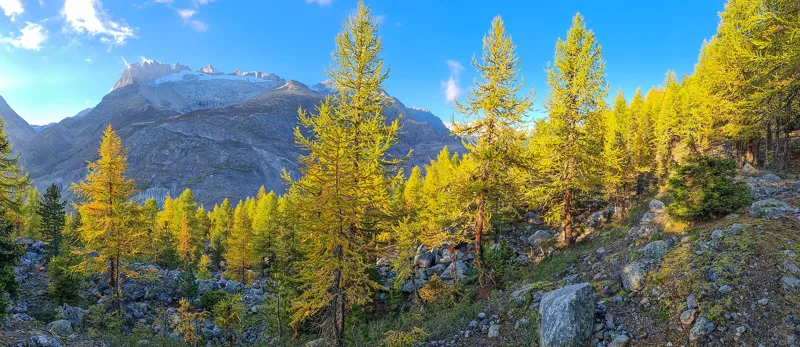
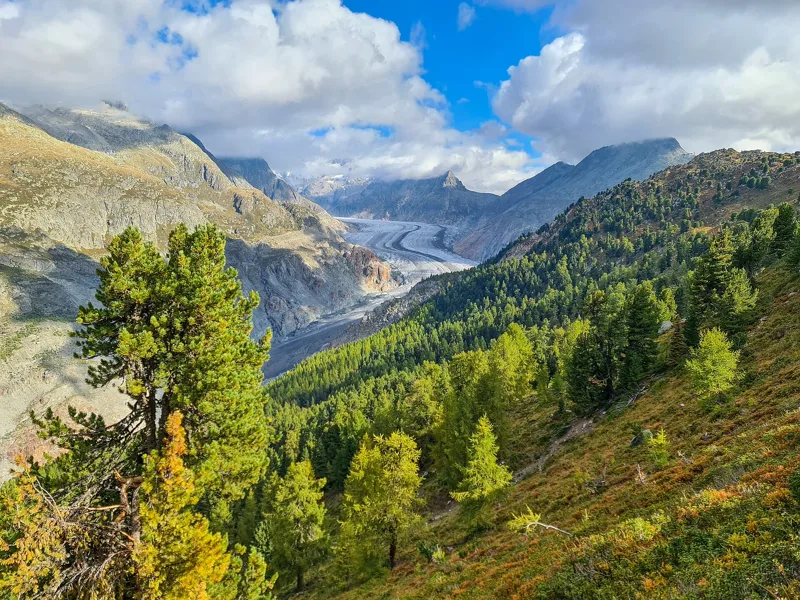
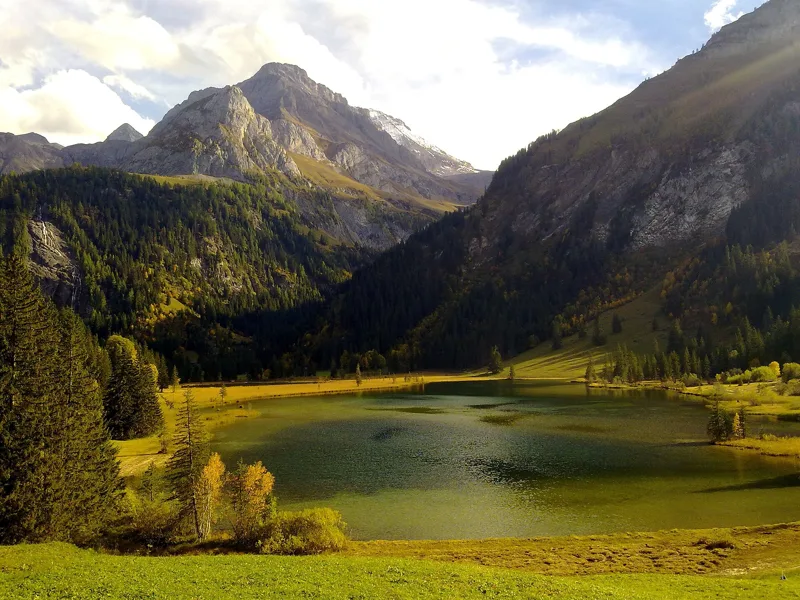
European larch forest in the Aletsch Forest Nature Reserve at golden hour in autumn

BivioSeason and snow

Hiking season and snow: when to head into the Swiss mountains

Up high, the season doesn't follow the calendar down in the valley. Here's how to read snow, frost and lift dates before you pick your day.

Which day are you hiking?

See each hike against the frost line

That day, on each hike

For each hike, one sentence tells you whether it climbs above the freezing level forecast that day (the lowest between 8 am and 6 pm): above it, frost and ice are possible. Next to it, its profile from start to finish, blue where it climbs above 0 °C, and the snow measured that morning at the station closest in altitude.

Reading the forecast and the stations…

Which region?
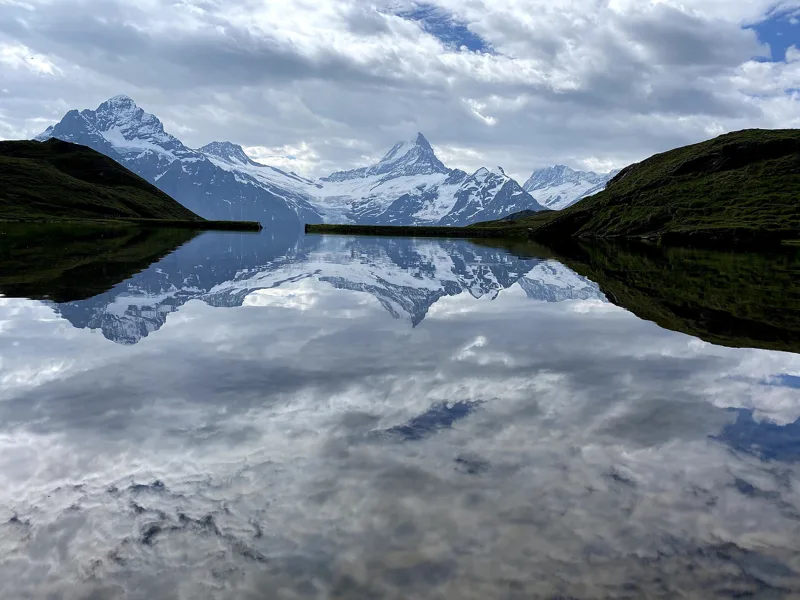
  1. The Bachalpsee reflecting the Alps in the morning
    Schynige Platte → Grindelwald, First
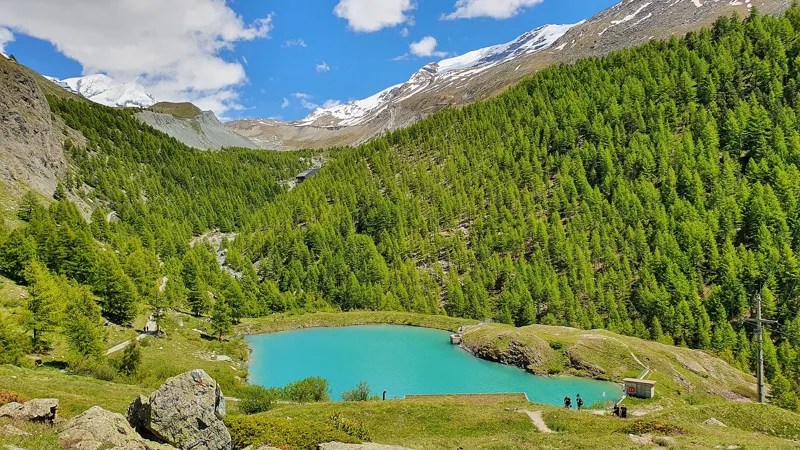
  2. The Moosjisee (Zermatt, Valais)
    5-Seenweg Zermatt
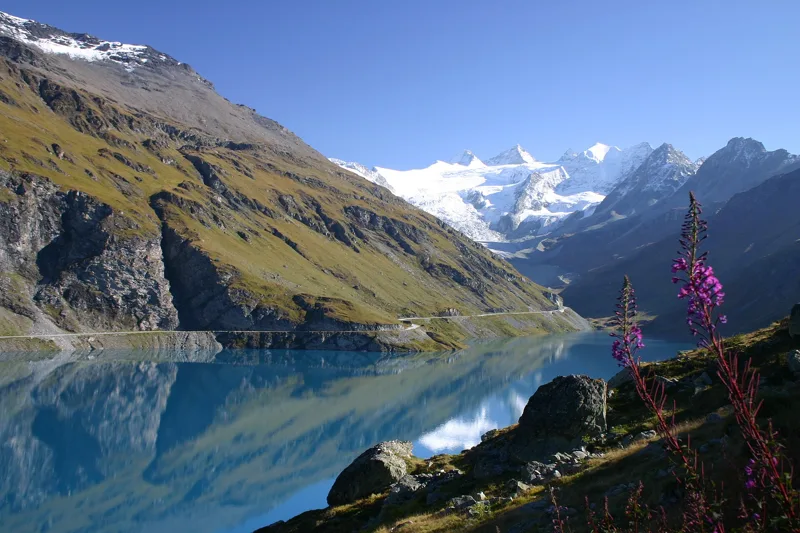
  3. Lac de Moiry, with the Moiry Glacier in the background
    Tour du Lac de Moiry
  4. View above La Tièche
    Sentier Panorama 4000
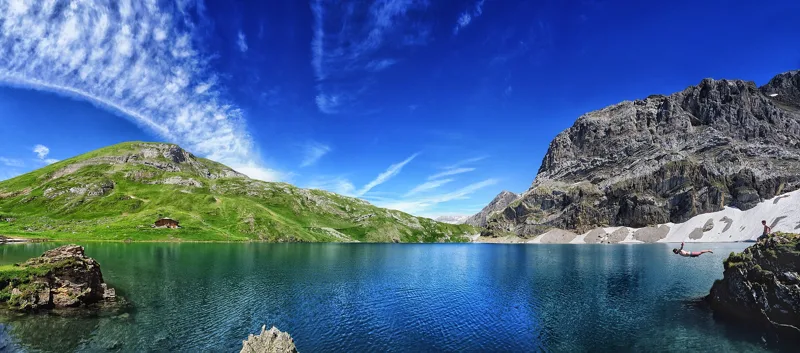
  5. Summer at the Iffigsee, a lake near Lenk in the canton of Bern
    Iffigsee-Rundweg
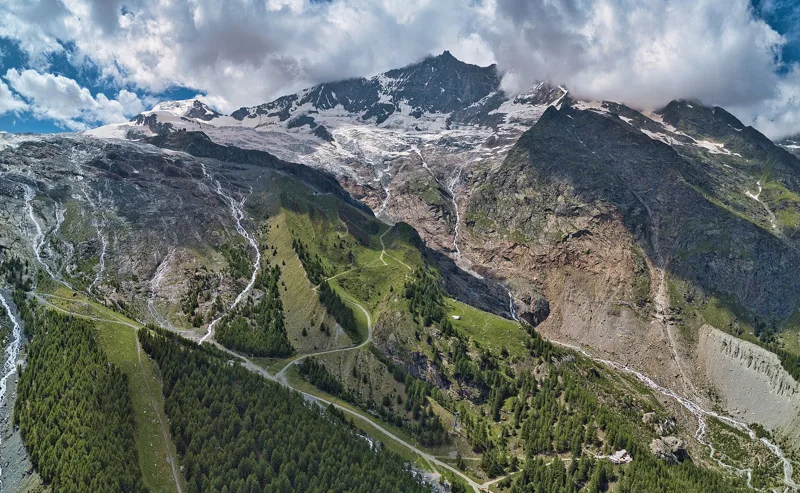
  6. Spielboden and the glacier, in 2024.
    Gemsweg Saas-Fee
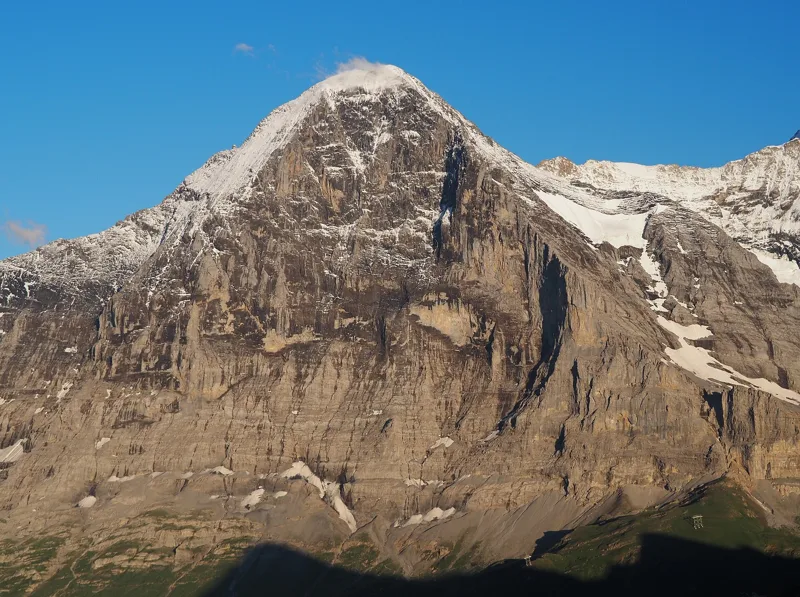
  7. The Eiger north face in the evening light
    Eiger Trail
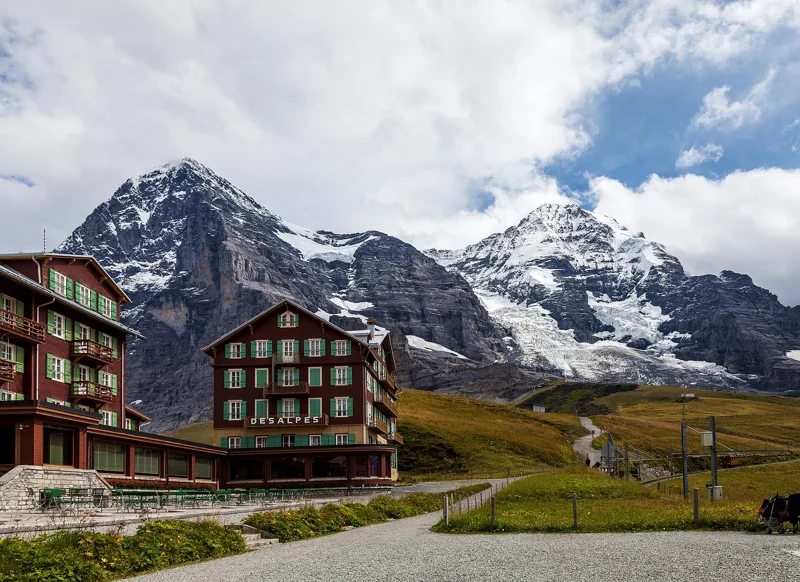
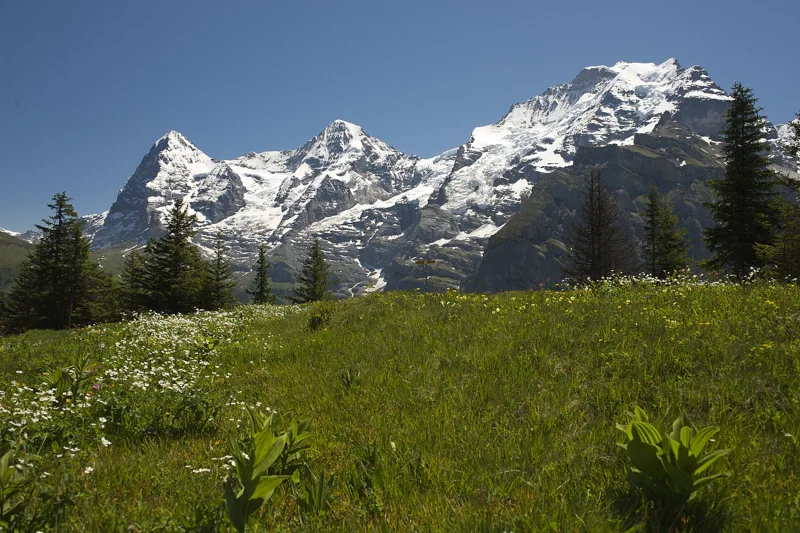
  8. The Eiger (3967 m) and the Mönch (4107 m) from Kleine Scheidegg (2061 m), Bernese Oberland
    Lauberhorn Trail
  9. Aletsch Glacier and the Aletsch Forest Nature Reserve in autumn
    Blatten, Belalp → Riederalp, Riederfurka
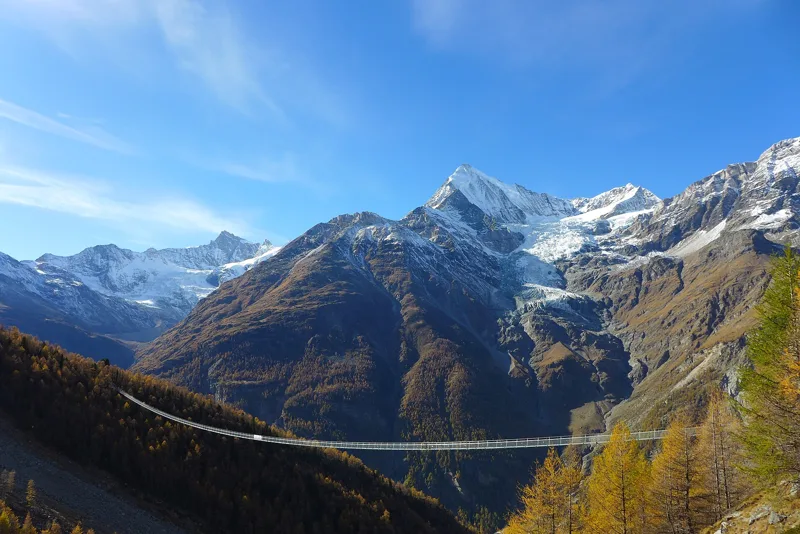
  10. The 494 m suspension bridge at Randa (SWISSROPE SkyWalk Randa)
    Randa Hängebrückenweg

A station measures snow at its own altitude, not along your whole trail. On the spot, snow on a given stretch is something you see on the ground.

Spring and autumn

Hiking trails are only maintained when they're free of snow and ice. The rest of the year, it's up to you to check their condition, especially in spring and autumn.

In the mountains, trails clear much later than in the lowlands. And from autumn on, the first snow can come back up high.

In spring: old snow

  • Snow can linger up high, often old, hard-packed snow. Go around steep snow slopes. Slipping on a snowfield can be fatal: without the right gear and experience, take another route or turn back.

  • In the morning, the ground can still be frozen. In spring, avalanches sometimes start far above and run down onto snow-free ground.

  • Before you go, ask the tourist office or the lift company whether the mountain trails are passable yet, and check the local webcams.

In autumn: short days and ice

  • Days get shorter: plan to be back before dark. Some trails can be icy even with no snow; if so, turn back.

  • It's hunting season too: find out about hunting areas and wear bright clothes. Some huts and lifts close at the end of the season.

What Bivio shows

Bivio never tells you a trail is dry or open. It shows you what's been measured and forecast, with the source and the time we read it, so you can decide.

Reading measured snow

A station measures snow at its own altitude, not along your whole route. If your hike climbs higher than the highest nearby station, Bivio tells you: up there, nobody's measuring. Most manual measuring sites are below roughly 2,000 m.

An empty box means "no measurement", never zero centimetres.

Lifts and summer buses

Many hikes start or finish with a cable car, a mountain railway or a bus that only runs part of the year. The region pages list their dates under "When to go": Valais, Bernese Oberland, Vaud Alps.

For the way back, always check the time of the last run.

In winter

Bivio's hikes follow SwitzerlandMobility's summer routes. In winter, you walk on other trails.

Winter hiking trails are marked in pink, with a hiker symbol. They're prepared, and technically similar to yellow summer trails.

Snowshoe trails are pink too, with a white snowshoe symbol. They're not tracked and often run away from prepared paths; their difficulty is shown in blue, red or black. You need snowshoes, poles, sure footing and an understanding of avalanche danger: the SLF avalanche bulletin comes out once or twice a day in winter.

Allow more time: cold and snow slow you down, and days are short.

Questions people ask

When are Swiss mountain trails passable?

It depends on the year's snow and the altitude. Ask the tourist office or the lift company, and check the measured snow on the hike page.

Are hiking trails maintained all year?

Only when they're free of snow and ice. In spring, autumn and winter, it's up to you to judge their condition before you go.

What is the freezing level?

It's the altitude where the air is at 0 °C, forecast hour by hour by MeteoSwiss. If it drops below your hike's highest point, Bivio warns you: snow and ice are possible up there.

What colour are winter hiking trails in Switzerland?

Pink. A hiker symbol for winter hiking trails, a white snowshoe for snowshoe trails.

Is the cable car on my hike running in October?

It depends on each lift. The region pages give season dates under "When to go", and the operator publishes its timetable.